அப்படியெல்லாம் ஒன்றுமில்லை. ஒரு நிகழ்ச்சியின் போது ஈரானிய பெண்கள் பாரம்பரிய உடை அணிந்து (அதான் முழு பர்தா) கையில் குரானை ஏந்தி பின்னணி இசையுடன் நடந்து வந்தார்களாம்.
அது குரான் டான்ஸ் என்று இஸ்லாமிய மதகுருக்கள் காட்டமாக உள்ளார்கள்.
இசை, ஓவியம், சிற்பம், கவிதை, காவியம், நடனம் என்று எந்த கலைகளுமே இல்லாத இஸ்லாமிய நாடுகளில் எல்லோரும் வெறிபிடித்து அலைவதில் என்ன ஆச்சரியம்?
Iran vice-president under fire over Koran "dance"
ReutersPublished: November 16, 2008
By Edmund Blair
An aide to Mahmoud Ahmadinejad has come under fire for attending a ceremony that involved actions deemed insulting to the Koran, a row that has given fuel to the Iranian president's opponents before next year's election.
Ahmadinejad is expected to run for re-election in June. But criticism over his economic management is mounting and he faces a more hostile parliament, which sacked his interior minister this month over a fake university degree.
In comments published on Sunday, opponents targeted his vice-president, Esfandiar Rahim Mashaie, who is in charge of a culture and tourism body, for hosting a ceremony where women in traditional dress carried in the Koran, Islam's holy book, to music. Media described the ceremony as a "dance."
"Violation of the sanctity (of the Koran) in the presence of your Excellency's deputy and under his management ... causes deep regret for every Muslim," the head of the Islamic Coalition Front, Mohammad-Nabbi Habibi, said in a letter to the president.
Today in Africa & Middle East
A rush for tin, a catastrophe for the CongoIraqi ministers agree to extend U.S. military presenceSomali president says Islamists control most of countryThe Front is a conservative party that previously backed the president but, along with some others in the broad conservative camp, has become increasingly critical of his policies.
Mashaie is not new to controversy. He created a storm earlier this year by saying Iran was friendly even to the people of Israel, Iran's sworn foe. Ahmadinejad had said those comments by his vice-president were misrepresented.
The "dance" row offers the president's critics ammunition, one political analysts said. "It's like giving those unhappy with Ahmadinejad another piece in this jigsaw puzzle (to piece together against him)," he said, asking not to be named.
The analyst said it would particularly play into the hands of pro-reform politicians, some of whom are trying to convince reformist former President Mohammad Khatami to run in June.
Clerics, including several ayatollahs, which is a top Shi'ite religious rank, have also assailed Ahmadinejad's vice- president. One described the ceremony as a "shameful" act.
Ahmadinejad, the first non-cleric to be president for about a quarter of a century, has had prickly relations with clerics before. Early in his presidency he had to reverse a decision to allow women into football stadiums after clerical criticism.
A group of clerics who are lawmakers in parliament called in a statement for the president "to deal legally with those behind this action" involving the Koran, ISNA news agency said.
Other lawmakers have said Mashaie should be sacked. Even a party close to Ahmadinejad has voiced concern.
Ahmadinejad is facing heavy criticism for economic policies. He came to power in 2005 vowing to spread Iran's oil wealth but critics say lavish spending has fuelled inflation and squandered oil earnings that should have been saved.
(Additional reporting by Parisa Hafezi and Zahra Hosseinian; Editing by Janet Lawrence)
Showing posts with label ஈரான். Show all posts
Showing posts with label ஈரான். Show all posts
Monday, November 17, 2008

சூபி இஸ்லாமுக்கு ஈரான் வழங்கும் வரவேற்பு
சுபி இஸ்லாமெல்லாம் இந்துக்களை மதம் மாற்றுவதற்குத்தான்.
தேவையான அளவு மதம் மாற்றியவுடன் சூபி வேஷத்தை கலைத்துவிட வேண்டியதுதான்
அப்படியும் யாராவது சூபி என்று வேஷம் போட்டால், அடித்து, உதைத்து, சவுக்கால அடித்து நாட்டை விட்டு துரத்திவிட வேண்டுமாம்.
அதனைத்தான் ஈரான் இந்த சூபி இஸ்லாமியருக்கு செய்துள்ளது.
Iran condemns Sufi to jail, flogging and exile
Published Date: November 16, 2008
TEHRAN: Iran's judiciary has sentenced a member of one of the country's largest Sufi sects to five years in jail, flogging and exile for spreading lies, the moderate Kargozaran newspaper reported yesterday. The report identified the man as Amir Ali Mohammad Labaf, member of the Nematollahis or Gonabadi Dervishes order based in the northeastern province of Khorassan Razavi.
Labaf was convicted by a court in Iran's clerical nerve center of Qom after it ruled that his holding of prayers as a Sufi was "a case of spreading lies," the report added, without elaborating. In addition to the five-year prison term, Labaf was sentenced to 74 lashes and exile to the southeastern town of Babak. Security forces have been involved in a number of clashes between the Muslim mystics and Shiite worshippers in the past few years.
Sufi worship is not illegal in Iran but the practice is frowned upon by many conservative clerics who regard it as an affront to Islam. The Islamic mysticism followed by an array of Sufi orders since the early centuries of the faith has always aroused suspicion among orthodox Muslims, whether Shiite or Sunni. In Shiite Islam, some Sufi orders have been further tarnished by the accusation of heresy because of their association with the unorthodox Alevi faith practiced in parts of Syria and Turkey. - AFP
தேவையான அளவு மதம் மாற்றியவுடன் சூபி வேஷத்தை கலைத்துவிட வேண்டியதுதான்
அப்படியும் யாராவது சூபி என்று வேஷம் போட்டால், அடித்து, உதைத்து, சவுக்கால அடித்து நாட்டை விட்டு துரத்திவிட வேண்டுமாம்.
அதனைத்தான் ஈரான் இந்த சூபி இஸ்லாமியருக்கு செய்துள்ளது.
Iran condemns Sufi to jail, flogging and exile
Published Date: November 16, 2008
TEHRAN: Iran's judiciary has sentenced a member of one of the country's largest Sufi sects to five years in jail, flogging and exile for spreading lies, the moderate Kargozaran newspaper reported yesterday. The report identified the man as Amir Ali Mohammad Labaf, member of the Nematollahis or Gonabadi Dervishes order based in the northeastern province of Khorassan Razavi.
Labaf was convicted by a court in Iran's clerical nerve center of Qom after it ruled that his holding of prayers as a Sufi was "a case of spreading lies," the report added, without elaborating. In addition to the five-year prison term, Labaf was sentenced to 74 lashes and exile to the southeastern town of Babak. Security forces have been involved in a number of clashes between the Muslim mystics and Shiite worshippers in the past few years.
Sufi worship is not illegal in Iran but the practice is frowned upon by many conservative clerics who regard it as an affront to Islam. The Islamic mysticism followed by an array of Sufi orders since the early centuries of the faith has always aroused suspicion among orthodox Muslims, whether Shiite or Sunni. In Shiite Islam, some Sufi orders have been further tarnished by the accusation of heresy because of their association with the unorthodox Alevi faith practiced in parts of Syria and Turkey. - AFP
Wednesday, October 01, 2008
ஈரான் பாராளுமன்றம்: மதமாறினால், மரணதண்டனை சட்டம் நிறைவேற்றம்
ஏராளமான ஈரானியர்கள் ஜோராஸ்டிரியனிஸம் என்ற ஈரானின் மிகப்பழைய மதத்துக்கு திரும்புகின்றனர். மற்றும் பலர் கிறிஸ்துவத்துக்கு செல்கின்றனர்
இதனால் அதிர்ச்சி அடைந்த ஈரானின் ஆளும் வர்க்கம், ஈரானியர் இஸ்லாமுக்கு மதம் மாறி வந்தால் மரணதண்டனை கிடையாது, இஸ்லாமை தவிர மற்ற மதங்களுக்கு மாறினால் மரணதண்டனை என்று அறிவித்துள்ளது.
நம் ஊர் அறிவுஜீவிகள் இதனை பற்றி மூச்சு விடுவார்களா?
Iranian parliament: Death to non-Muslim converts
Charlie Butts - OneNewsNow - 9/27/2008 4:10:00 AM
Iran's parliament has passed the death penalty for apostasy, which is viewed in that country as converting to any other faith than Islam.
Thousands of Iranians have been converting to Christianity, and the underground church is thriving, according to reports. But other Iranians are returning to Zoroastrianism, which was the dominant religion in Iran at one time. Jonathan Rocho, with International Christian Concern (ICC), explains.
"We, as a Christian organization, are very much concerned about this because this means many Christians who converted from Islam are going to face death, simply because of their decision to follow Jesus Christ," Rocho laments.
He says Iranians are questioning the Muslim faith after living under the regime, which has been dominated by the religion since the revolution in the 1970s. "They have not seen any change in their lives," Rocho adds. "There is even more repression, more problems going on in the country, so they are very much confused about the Islamic faith."
Already, two Christian converts accused of apostasy have been given the death penalty. Since Iran does not easily succumb to international pressure, Rocho urges people to pray.
இதனால் அதிர்ச்சி அடைந்த ஈரானின் ஆளும் வர்க்கம், ஈரானியர் இஸ்லாமுக்கு மதம் மாறி வந்தால் மரணதண்டனை கிடையாது, இஸ்லாமை தவிர மற்ற மதங்களுக்கு மாறினால் மரணதண்டனை என்று அறிவித்துள்ளது.
நம் ஊர் அறிவுஜீவிகள் இதனை பற்றி மூச்சு விடுவார்களா?
Iranian parliament: Death to non-Muslim converts
Charlie Butts - OneNewsNow - 9/27/2008 4:10:00 AM
Iran's parliament has passed the death penalty for apostasy, which is viewed in that country as converting to any other faith than Islam.
Thousands of Iranians have been converting to Christianity, and the underground church is thriving, according to reports. But other Iranians are returning to Zoroastrianism, which was the dominant religion in Iran at one time. Jonathan Rocho, with International Christian Concern (ICC), explains.
"We, as a Christian organization, are very much concerned about this because this means many Christians who converted from Islam are going to face death, simply because of their decision to follow Jesus Christ," Rocho laments.
He says Iranians are questioning the Muslim faith after living under the regime, which has been dominated by the religion since the revolution in the 1970s. "They have not seen any change in their lives," Rocho adds. "There is even more repression, more problems going on in the country, so they are very much confused about the Islamic faith."
Already, two Christian converts accused of apostasy have been given the death penalty. Since Iran does not easily succumb to international pressure, Rocho urges people to pray.
Wednesday, September 17, 2008
சுரையாவை கல்லாலடித்து கொல்லுதல்- திரைப்படத்துக்கு ஈரான் எதிர்ப்பு
18 வயது பெண் சுரைய்வும் அவரது தாயாரும் 1984இல் கல்லாலடித்து கொல்லப்பட்டார்கள்.
தவறான நடத்தைகொண்டவர்கள் இவர்கள் என்று ஈரான் நீதித்துறை அளித்த தீர்ப்பின்படி இவர்கள் கல்லாலடித்து கொல்லப்பட்டனர்.
இதனை அடிப்படையாக வைத்து 'The Stoning of Soraya M என்ற படம் வெளிவந்து டோரண்டோ திரைப்பட விழாவில் வெளியிடப்பட்டுள்ளது.
இதற்கு ஈரான் எதிர்ப்பு தெரிவித்துள்ளது.
Iran: Controversial film a hit at Toronto festival
Rome, 16 Sept. (AKI) - An Iranian feature film that tells the story of a woman being stoned to death has made headlines at the Toronto Film Festival and provoked an angry response from Iranian authorities.
The film, entitled 'The Stoning of Soraya M.' by Iranian-American director Sirous Norasteh, was shown at the festival which ended last Saturday.
The film tells the real-life story of Soraya, an 18-year-old woman and mother stoned to death in 1984 for alleged sexual infidelity in western Iran.
The film has been described by Iran's state news agency Irna as another "Hollywood operation to damage the image of the Islamic Republic."
"(It's) a film that serves the warmongering strategy of George W. Bush," said Iran's semi-official news agency Fars.
The story of the film says that Soraya’s husband Ali no longer wants to be with her after they had four children together, and that he wants to marry a 14-year-old girl.
Ali cannot afford two wives, so he demands a divorce from Soraya, who refuses for economic reasons. Instead, Ali conspires with the local mullah to frame Soraya for infidelity.
The story is told by her aunt, Zahra, played by Iranian expatriate and Oscar-nominated actress Shohre Aghadashlou.
The film is based on a book published in Paris in 1994 by Franco-Iranian journalist Fereydoun Sahebjam.
Fereydoun is played in the film by Jim Caveziel, who acted in Mel Gibson's film The Passion of the Christ.
தவறான நடத்தைகொண்டவர்கள் இவர்கள் என்று ஈரான் நீதித்துறை அளித்த தீர்ப்பின்படி இவர்கள் கல்லாலடித்து கொல்லப்பட்டனர்.
இதனை அடிப்படையாக வைத்து 'The Stoning of Soraya M என்ற படம் வெளிவந்து டோரண்டோ திரைப்பட விழாவில் வெளியிடப்பட்டுள்ளது.
இதற்கு ஈரான் எதிர்ப்பு தெரிவித்துள்ளது.
Iran: Controversial film a hit at Toronto festival
Rome, 16 Sept. (AKI) - An Iranian feature film that tells the story of a woman being stoned to death has made headlines at the Toronto Film Festival and provoked an angry response from Iranian authorities.
The film, entitled 'The Stoning of Soraya M.' by Iranian-American director Sirous Norasteh, was shown at the festival which ended last Saturday.
The film tells the real-life story of Soraya, an 18-year-old woman and mother stoned to death in 1984 for alleged sexual infidelity in western Iran.
The film has been described by Iran's state news agency Irna as another "Hollywood operation to damage the image of the Islamic Republic."
"(It's) a film that serves the warmongering strategy of George W. Bush," said Iran's semi-official news agency Fars.
The story of the film says that Soraya’s husband Ali no longer wants to be with her after they had four children together, and that he wants to marry a 14-year-old girl.
Ali cannot afford two wives, so he demands a divorce from Soraya, who refuses for economic reasons. Instead, Ali conspires with the local mullah to frame Soraya for infidelity.
The story is told by her aunt, Zahra, played by Iranian expatriate and Oscar-nominated actress Shohre Aghadashlou.
The film is based on a book published in Paris in 1994 by Franco-Iranian journalist Fereydoun Sahebjam.
Fereydoun is played in the film by Jim Caveziel, who acted in Mel Gibson's film The Passion of the Christ.
Tuesday, August 26, 2008
ஈரான்: பர்தா போடாததற்காக டூரிஸ்டுகளுக்கு அடி உதை சிறை
ஈரானுக்கு டூரிஸ்டாக போவாணேன்? அப்புறம் அடி உதை வாங்குவானேன்?
Iran: Beating up tourists in Shiraz
Sunday, 24 August 2008
NCRI – Last week six women and a man touring the southern city of Shiraz were beaten and arrested. The State Security Forces (SSF) – mullahs' suppressive police – Chastity Unit patrolling the streets stopped a group of East Asians touring the city for not observing the strictly imposed dress code. Not having a translator, the group resisted the SSF agents and was severely beaten and arrested.
The Asian tourists then spent a few hours at the SSF custody before finally being released by their country's embassy.
This was not an isolated incident of the kind. In the past year there have been tourists harassed by the SSF enforcing the dress code in line with the suppressive "boosting public security plan."
The so-called "boosting public security plan" was first introduced in April 2007 to combat popular uprisings. Mass street arrests of hundreds of thousands of women and youth under the pretext of "mal-veiling" and cracking down on "thugs and hooligans" followed. In the same period, more than 300 prisoners were sent to gallows.
[ Back ]
Iran: Beating up tourists in Shiraz
Sunday, 24 August 2008
NCRI – Last week six women and a man touring the southern city of Shiraz were beaten and arrested. The State Security Forces (SSF) – mullahs' suppressive police – Chastity Unit patrolling the streets stopped a group of East Asians touring the city for not observing the strictly imposed dress code. Not having a translator, the group resisted the SSF agents and was severely beaten and arrested.
The Asian tourists then spent a few hours at the SSF custody before finally being released by their country's embassy.
This was not an isolated incident of the kind. In the past year there have been tourists harassed by the SSF enforcing the dress code in line with the suppressive "boosting public security plan."
The so-called "boosting public security plan" was first introduced in April 2007 to combat popular uprisings. Mass street arrests of hundreds of thousands of women and youth under the pretext of "mal-veiling" and cracking down on "thugs and hooligans" followed. In the same period, more than 300 prisoners were sent to gallows.
[ Back ]
Wednesday, August 20, 2008
நபி முகம்மதுவின் உருவத்தை மிகப்பெரிதாக வரைந்த ஓவியம் ஈரானில் அரங்கேற்றம்
நபி முகம்மதுவின் உருவத்தை மிகப்பெரிதாக வரைந்த ஓவியம் ஈரானில் அரங்கேற்றம் செய்யப்பட்டுள்ளது.
நபி முகமது சொர்க்கத்துக்கு குதிரையில் ஏறி போனதை இரண்டு வருடங்களாக பெரிய அளவில் (ஈரானின் சிறு ஓவியங்கள் பாணியில்) வரைந்துள்ளவர் ரேஜா நஸாபி அஸல் என்பவர்.
இதற்காக இந்தியாவிலும் பாகிஸ்தானிலும் சியா சுன்னி கலவரம் ஏதேனும் நடக்குமா என்று தெரியவில்லை.
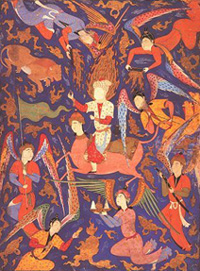
Iran Unveils Prophet Mohammad Painting
TEHRAN (FNA)- The Iranian city of Zanjan has unveiled the largest miniature painting, which portrays the Prophet Mohammad's (PBUH) ascent to heaven.
According to a press tv report, it took two years for the artist, Reza Najafi-Asl, to create the painting in the style of Iran's master miniaturist Mahmoud Farshchian.
The 32-year-old artist has used 70 acrylic colors to depict Prophet Mohammad (PBUH) sitting on a horse and three angels whirling around him.
Masoumeh Heidari has adorned the margin of the painting with illuminations, inspired by the work of the late illuminist, Haj Mirza Emami.
நபி முகமது சொர்க்கத்துக்கு குதிரையில் ஏறி போனதை இரண்டு வருடங்களாக பெரிய அளவில் (ஈரானின் சிறு ஓவியங்கள் பாணியில்) வரைந்துள்ளவர் ரேஜா நஸாபி அஸல் என்பவர்.
இதற்காக இந்தியாவிலும் பாகிஸ்தானிலும் சியா சுன்னி கலவரம் ஏதேனும் நடக்குமா என்று தெரியவில்லை.
Iran Unveils Prophet Mohammad Painting
TEHRAN (FNA)- The Iranian city of Zanjan has unveiled the largest miniature painting, which portrays the Prophet Mohammad's (PBUH) ascent to heaven.
According to a press tv report, it took two years for the artist, Reza Najafi-Asl, to create the painting in the style of Iran's master miniaturist Mahmoud Farshchian.
The 32-year-old artist has used 70 acrylic colors to depict Prophet Mohammad (PBUH) sitting on a horse and three angels whirling around him.
Masoumeh Heidari has adorned the margin of the painting with illuminations, inspired by the work of the late illuminist, Haj Mirza Emami.
Tuesday, May 27, 2008
பெண்ணுரிமை பற்றி பேசியதற்காக ஈரானிய ஆணுக்கு கடுங்காவல் சிறைதண்டனை
அமிர் யாகூபலி என்பவர் ஈரானில் பெண்கள் எந்த விதமான மனித உரிமைகளும் இல்லாமல் வாழ்வதை காண பொறுக்காமல் மில்லியன் கையெழுத்து இயக்கம் நடத்தி பெண்களுக்கும் உரிமைகள் வேண்டும் என்று போராடிவந்தார்.
இவ்வாறு கையெழுத்துகள் வாங்கியதற்காக அவருக்கு கடுங்காவல் சிறை தண்டனை வழங்கப்பட்டுள்ளதாக ஈரானின் கார்கோசரான் பத்திரிக்கை தெரிவித்துள்ளது
Iranian man jailed over feminism petition: report Mon May 26, 5:52 AM ET
TEHRAN (AFP) - A male defender of the feminist cause in Iran has been sentenced to a year in prison, the moderate Kargozaran newspaper reported on Monday.
Amir Yaqoubali is a supporter of the "One Million Signatures" petition campaign launched in June 2006. According to a feminist website, he was arrested as he collected signatures.
The campaign seeks to change the Islamic republic's laws on marriage, divorce, inheritance and child custody by collecting signatures both online and in person.
In recent months four feminists -- Rezvan Moghadam, Nahid Jafari, Nasrin Afzali and Marzieh Mortazi Langueroudi -- were handed down suspended sentences of six months in prison and 10 lashes by Tehran Revolutionary Court for disorderly conduct in public.
In March last year, they took part in a rally outside the same court to protest against the arrest of five feminists in June 2006.
Several other activists, arrested for their pro-feminism stance, are still in jail.
இவ்வாறு கையெழுத்துகள் வாங்கியதற்காக அவருக்கு கடுங்காவல் சிறை தண்டனை வழங்கப்பட்டுள்ளதாக ஈரானின் கார்கோசரான் பத்திரிக்கை தெரிவித்துள்ளது
Iranian man jailed over feminism petition: report Mon May 26, 5:52 AM ET
TEHRAN (AFP) - A male defender of the feminist cause in Iran has been sentenced to a year in prison, the moderate Kargozaran newspaper reported on Monday.
Amir Yaqoubali is a supporter of the "One Million Signatures" petition campaign launched in June 2006. According to a feminist website, he was arrested as he collected signatures.
The campaign seeks to change the Islamic republic's laws on marriage, divorce, inheritance and child custody by collecting signatures both online and in person.
In recent months four feminists -- Rezvan Moghadam, Nahid Jafari, Nasrin Afzali and Marzieh Mortazi Langueroudi -- were handed down suspended sentences of six months in prison and 10 lashes by Tehran Revolutionary Court for disorderly conduct in public.
In March last year, they took part in a rally outside the same court to protest against the arrest of five feminists in June 2006.
Several other activists, arrested for their pro-feminism stance, are still in jail.
Wednesday, February 27, 2008
ஈரான் : இஸ்லாமிலிருந்து வெளியேறினால் மரண தண்டனை
இதுவரை ஷரியா சட்டத்தில் மட்டுமே இருந்த மரண தண்டனையை தற்போது பீனல் கோடிலும் கொண்டுவர ஈரான் அரசு முயற்சித்து வருகிறது.
இதுவரை ஷரியா நீதிமன்றத்தில் கொடுக்கப்பட்ட மரணதண்டனை சிவில் நீதிமன்றத்துக்கு செல்லும்போது நீக்கப்பட்ட்டு வந்தது.
தற்போது அதுவும் மாற்றப்பட்டு, இஸ்லாமிலிருந்து வெளியேறுவது அரசாங்கத்துக்கு எதிரான குற்றமாக கருதப்பட்டு மரணதண்டனை கொடுக்கப்படும் என்று தெரிகிறது.
EU attacks Iran's new penal code
By Roger Hardy
Middle East analyst, BBC News
The European Union has criticised the new penal code being drafted in Iran, particularly a section that imposes the death penalty for giving up Islam.
The EU said this section and other parts of the code violated Tehran's commitments under international human rights conventions.
Death for apostasy already exists in Iran under Sharia - or Islamic - law.
But the changes would for the first time bring the punishment into the criminal code.
Scholars divided
An EU statement expressed deep concern about what it calls the ongoing deterioration in the human rights situation in Iran. It singled out Section Five of the draft penal code currently before the Iranian parliament, imposing the death penalty for apostasy.
In the past, Iranian courts have handed down the death penalty in such cases, but have done so relying on Sharia law.
If the draft is approved by parliament, the sentence will be formalised in the country's criminal code.
Muslim scholars are divided over what the appropriate punishment should be for leaving Islam.
Some conservatives regard it as such a heinous offence as to warrant the death penalty.
Others believe it is not up to politicians or governments to set the penalty but is for God to decide on the Day of Judgement.
இதுவரை ஷரியா நீதிமன்றத்தில் கொடுக்கப்பட்ட மரணதண்டனை சிவில் நீதிமன்றத்துக்கு செல்லும்போது நீக்கப்பட்ட்டு வந்தது.
தற்போது அதுவும் மாற்றப்பட்டு, இஸ்லாமிலிருந்து வெளியேறுவது அரசாங்கத்துக்கு எதிரான குற்றமாக கருதப்பட்டு மரணதண்டனை கொடுக்கப்படும் என்று தெரிகிறது.
EU attacks Iran's new penal code
By Roger Hardy
Middle East analyst, BBC News
The European Union has criticised the new penal code being drafted in Iran, particularly a section that imposes the death penalty for giving up Islam.
The EU said this section and other parts of the code violated Tehran's commitments under international human rights conventions.
Death for apostasy already exists in Iran under Sharia - or Islamic - law.
But the changes would for the first time bring the punishment into the criminal code.
Scholars divided
An EU statement expressed deep concern about what it calls the ongoing deterioration in the human rights situation in Iran. It singled out Section Five of the draft penal code currently before the Iranian parliament, imposing the death penalty for apostasy.
In the past, Iranian courts have handed down the death penalty in such cases, but have done so relying on Sharia law.
If the draft is approved by parliament, the sentence will be formalised in the country's criminal code.
Muslim scholars are divided over what the appropriate punishment should be for leaving Islam.
Some conservatives regard it as such a heinous offence as to warrant the death penalty.
Others believe it is not up to politicians or governments to set the penalty but is for God to decide on the Day of Judgement.
Wednesday, December 19, 2007
பர்தா போடாத பெண், பெண்ணின் கணவன், பெண்ணின் தந்தை எல்லோரும் கொல்லப்படவேண்டும்- இஸ்லாமிய இமாம் கட்டளை!
பர்தா போடாத பெண்களெல்லாம் கொல்லப்படவேண்டும் என்று தலைமை இஸ்லாமிய இமாம் ஹோஜோதோ இஸ்லாம் கொலாம் ரேஜா ஆணை பிறப்பித்துள்ளார்
ஹிஜாப் போடாத பெண்ணும் அவரது கணவனும் கொல்லப்படவேண்டியவர்கள் என்றும் அறிவித்துள்ளார்
அடுத்த வரியில் அந்த பெண்ணின் தந்தையையும் கொல்லவேண்டும் என்றும் அறிவித்துள்ளார்.
Iran: Top cleric says women without veils must die
Tehran, 19 Dec. (AKI) - A top Muslim cleric in Iran, Hojatolislam Gholam Reza Hassani said on Wednesday that women in Iran who do not wear the hijab or Muslim headscarf, should die.
"Women who do not respect the hijab and their husbands deserve to die," said Hassani, who leads Friday prayers in the city of Urumieh, in Iranian Azerbaijan.
"I do not understand how these women who do not respect the hijab, 28 years after the birth of the Islamic Republic, are still alive," he said.
"These women and their husbands and their fathers must die," said Hassani, who is the representative of the Iranian Supreme Leader Ayatollah Seyyed Ali Khamenei in eastern Azerbaijan.
Hassani's statements came after two Kurdish feminists in Iran were accused of being members of an armed rebel group and of carrying out subversive activities threatening the security of the state.
It is believed that his statements and the arrests could spark a fresh crackdown on women who do not repect the Islamic dress code in Iran.
Thousands of women in Iran have already been warned this year for their "un-Islamic dress" such as wearing tight, short coats and skimpy headscarves.
ஹிஜாப் போடாத பெண்ணும் அவரது கணவனும் கொல்லப்படவேண்டியவர்கள் என்றும் அறிவித்துள்ளார்
அடுத்த வரியில் அந்த பெண்ணின் தந்தையையும் கொல்லவேண்டும் என்றும் அறிவித்துள்ளார்.
Iran: Top cleric says women without veils must die
Tehran, 19 Dec. (AKI) - A top Muslim cleric in Iran, Hojatolislam Gholam Reza Hassani said on Wednesday that women in Iran who do not wear the hijab or Muslim headscarf, should die.
"Women who do not respect the hijab and their husbands deserve to die," said Hassani, who leads Friday prayers in the city of Urumieh, in Iranian Azerbaijan.
"I do not understand how these women who do not respect the hijab, 28 years after the birth of the Islamic Republic, are still alive," he said.
"These women and their husbands and their fathers must die," said Hassani, who is the representative of the Iranian Supreme Leader Ayatollah Seyyed Ali Khamenei in eastern Azerbaijan.
Hassani's statements came after two Kurdish feminists in Iran were accused of being members of an armed rebel group and of carrying out subversive activities threatening the security of the state.
It is believed that his statements and the arrests could spark a fresh crackdown on women who do not repect the Islamic dress code in Iran.
Thousands of women in Iran have already been warned this year for their "un-Islamic dress" such as wearing tight, short coats and skimpy headscarves.
Thursday, December 13, 2007
இஸ்லாமிய பெண்கள் பூட்ஸ்- தொப்பி போடக்கூடாது- லேட்டஸ்ட் ஷாரியா சட்டம்
தலையில் தொப்பியோ அல்லது பூட்ஸோ பெண்கள் அணியக்கூடாது. அப்படி அணிந்தால் ஆண்கள் உணர்ச்சி வசப்பட்டுவிடுவார்கள். அது இஸ்லாமிய ஷாரியாவுக்கு எதிரானது என்று ஈரானின் லேட்டஸ்ட் சட்டம் கூறுகிறது.
Iran: Women banned from wearing boots
Tehran, 12 Dec. (AKI) - Women have been banned from wearing boots and hats on the streets of Tehran.
Police chief, General Ahmad Radan, announced the ban on Wednesday saying that boots could only be worn if they were covered by pants.
"If boots are not covered by pants that fall to the ankles, they show the female shape and that is therefore in contradiction with Islamic dress code," said Radan.
Iranian women can no longer leave home with their pants pushed inside their boots and they can no longer wear hats without a veil.
"A hat is not an adequate substitute for a veil or a hijab," he said. " If someone really wants to wear a hat, they can put it on the veil."
Feminist Rezvan Moghdaddam told Adnkronos International (AKI) that police should be concerned about drug traffickers than street fashion.
"Instead of being busy with women's hats and boots, the police would be better catching the merchants of death that kill our young people with drugs," she said from Tehran.
"Our cities are infested by delinquents and security forces are only worried about how women dress, all this is really ridiculous."
Generale Radan said decision to apply the Islamic code had come from a committee composed of the Revolutionary Guard, the judiciary, police and officials from the intelligence ministry and the ministry of culture and Islamic orientation.
Iran: Women banned from wearing boots
Tehran, 12 Dec. (AKI) - Women have been banned from wearing boots and hats on the streets of Tehran.
Police chief, General Ahmad Radan, announced the ban on Wednesday saying that boots could only be worn if they were covered by pants.
"If boots are not covered by pants that fall to the ankles, they show the female shape and that is therefore in contradiction with Islamic dress code," said Radan.
Iranian women can no longer leave home with their pants pushed inside their boots and they can no longer wear hats without a veil.
"A hat is not an adequate substitute for a veil or a hijab," he said. " If someone really wants to wear a hat, they can put it on the veil."
Feminist Rezvan Moghdaddam told Adnkronos International (AKI) that police should be concerned about drug traffickers than street fashion.
"Instead of being busy with women's hats and boots, the police would be better catching the merchants of death that kill our young people with drugs," she said from Tehran.
"Our cities are infested by delinquents and security forces are only worried about how women dress, all this is really ridiculous."
Generale Radan said decision to apply the Islamic code had come from a committee composed of the Revolutionary Guard, the judiciary, police and officials from the intelligence ministry and the ministry of culture and Islamic orientation.
Thursday, October 18, 2007
இஸ்லாமை அவமதித்ததற்காக 3 ஈரானிய மாணவர் தலைவர்களுக்கு தண்டனை
இஸ்லாமை அவமதித்ததற்காக 3 ஈரானிய மாணவர் தலைவர்களுக்கு தண்டனை வழங்கப்பட்டுள்ளது.
Deirdre Jurand at 2:35 PM ET
Iran court sentences students for insulting Islam
Deirdre Jurand at 2:35 PM ET
[JURIST] An Iranian court sentenced three university students to prison terms ranging from two to three years for insulting Islam and Islamic clerics, the students' lawyer said Tuesday. Officials arrested the students [AFP report], Majid Tavakoli, Ahmed Ghassaban and Ehsan Mansouri, in May along with five other students on charges of endangering national security and insulting Islam. Lawyer Mohammad Ali Dadkhah said the trial opened September 22 and closed Tuesday with sentences of three years in prison for Tavakoli, two-and-one-half years for Ghassaban and two years for Mansouri. Dadkhah, a human rights lawyer who is part of the team of Nobel Peace Prize winner Shirin Ebadi [Nobel profile; JURIST news archive] team, said he is unsure whether the court intended suspended terms or prison time. The students all attend Amirkabir University of Technology [official website] in Tehran and are leaders of Daftar-e Tahkim-e Vahdat (the Office for the Consolidation of Unity) [HRW profile], the largest-known Iranian student reform group. Group officials and the three students maintain [AFP report] that the newsletter that contained the "insults" was made by more conservative people to frame the group. Dadkhah said the students plan to appeal the judgments.Iran has recently made a number of high-profile arrests of scholars accused of endangering national security, including Iranian-American Dr. Haleh Esfandiari [JURIST news archive]. Esfandiari, director of the Middle East program at the US-based Woodrow Wilson International Center for Scholars, was arrested in May, detained for over 100 days, but was released on bail and left Iran [JURIST reports] in September. Charges against her still stand. AP has more.
Sunday, September 30, 2007
ஈரானில் ஓரினப் பாலுறவினர் இல்லை -( ஏனெனில்) - அஹமதிநிஜாத்
ஈரானில் ஓரினப் பாலுறவினர் இல்லை என்று ஈரான் ஜனாதிபதி அஹமதிநிஜாத் தெரிவித்துள்ளார். ஏனென்று தெரியவேண்டுமே .. கீழே பாருங்கள்
'No homosexuals in Iran': Ahmadinejad
5 days ago
NEW YORK (AFP) — Iranian President Mahmoud Ahmadinejad skirted a question about the treatment of homosexuals in Iran on Monday, saying in a speech at a top US university that there were no gays in Iran.
"In Iran we don't have homosexuals like in your country," Ahmadinejad said to howls and boos among the Columbia University audience.
"In Iran we do not have this phenomenon, I don't know who has told you that we have it," he said.
Ahmadinejad was challenged during his appearance on Amnesty International figures that suggested that 200 people had been executed in Iran so far this year, among them homosexuals.
"Don't you have capital punishment in the United States? You do too. In Iran there is capital punishment," he said.
கீழே படியுங்கள். இதுதான் காரணம்.
ஒருவேளை இவர்கள்தான் கடைசி ஓரின பாலுறவாளர்களாக இருந்திருக்கலாம்.
ஈரானில் ஓரின பாலுறவாளர்களாக இருந்தால் மரண தண்டனை கொடுக்கப்படுகிறது.
Iran Publicly Hangs Two Gay Teenagers
Ross von Metzke
Two unidentified gay teenagers were publicly executed in Iran this week for the crime of homosexuality. According to the London Times, the youths were executed in Edalat (Justice) Square in the city of Mashhad, in north-east Iran.
Iran enforces Islamic Sharia law, which dictates the death penalty for gay sex.
Both youths were identified only by their initials, M.A. and A.M. One teen was 18 years old and the other was under 18.
They admitted – likely under torture, London-based gay human rights group Outrage! suggests — to having gay sex but claimed in their defense that most young boys had sex with each other and that they were not aware that homosexuality was punishable by death.
According to the London Times, the teens were held in prison for 14 months and severely beaten prior to their execution.
Ruhollah Rezazadeh, the lawyer of the youngest boy (under 18), had appealed that he was too young to be executed and that the court should take into account his young age. But the Supreme Court in Tehran ordered him to be hanged.
Under the Iranian penal code, girls as young as nine and boys as young as 15 can be hanged.
According to Outrage!, three other young gay Iranians are being hunted by the police, but they have gone into hiding and cannot be found. If caught, they will also face execution.
News of the two executions was first reported by ISNA (Iranian Students News Agency) on Tuesday morning. A later news story by Iran In Focus, based on this original ISNA report, claimed the youths were executed for sexually assaulting a 13 year old boy. But the ISNA report does not mention any sexual assault.
“This is just the latest barbarity by the Islamo-fascists in Iran,” Peter Tatchell, board members of OutRage!, said. “According to Iranian human rights campaigners, over 4,000 lesbians and gay men have been executed since the Ayatollahs seized power in 1979.”
Outrage! is calling for world-wide urgent action and is asking world leaders to protest the Iranian Ambassador at the Embassy in their countries. In addition, Outrage! Is also asking world leaders to take urgent action against Iran.
'No homosexuals in Iran': Ahmadinejad
5 days ago
NEW YORK (AFP) — Iranian President Mahmoud Ahmadinejad skirted a question about the treatment of homosexuals in Iran on Monday, saying in a speech at a top US university that there were no gays in Iran.
"In Iran we don't have homosexuals like in your country," Ahmadinejad said to howls and boos among the Columbia University audience.
"In Iran we do not have this phenomenon, I don't know who has told you that we have it," he said.
Ahmadinejad was challenged during his appearance on Amnesty International figures that suggested that 200 people had been executed in Iran so far this year, among them homosexuals.
"Don't you have capital punishment in the United States? You do too. In Iran there is capital punishment," he said.
கீழே படியுங்கள். இதுதான் காரணம்.
ஒருவேளை இவர்கள்தான் கடைசி ஓரின பாலுறவாளர்களாக இருந்திருக்கலாம்.
ஈரானில் ஓரின பாலுறவாளர்களாக இருந்தால் மரண தண்டனை கொடுக்கப்படுகிறது.
Iran Publicly Hangs Two Gay Teenagers
Ross von Metzke
Two unidentified gay teenagers were publicly executed in Iran this week for the crime of homosexuality. According to the London Times, the youths were executed in Edalat (Justice) Square in the city of Mashhad, in north-east Iran.
Iran enforces Islamic Sharia law, which dictates the death penalty for gay sex.
Both youths were identified only by their initials, M.A. and A.M. One teen was 18 years old and the other was under 18.
They admitted – likely under torture, London-based gay human rights group Outrage! suggests — to having gay sex but claimed in their defense that most young boys had sex with each other and that they were not aware that homosexuality was punishable by death.
According to the London Times, the teens were held in prison for 14 months and severely beaten prior to their execution.
Ruhollah Rezazadeh, the lawyer of the youngest boy (under 18), had appealed that he was too young to be executed and that the court should take into account his young age. But the Supreme Court in Tehran ordered him to be hanged.
Under the Iranian penal code, girls as young as nine and boys as young as 15 can be hanged.
According to Outrage!, three other young gay Iranians are being hunted by the police, but they have gone into hiding and cannot be found. If caught, they will also face execution.
News of the two executions was first reported by ISNA (Iranian Students News Agency) on Tuesday morning. A later news story by Iran In Focus, based on this original ISNA report, claimed the youths were executed for sexually assaulting a 13 year old boy. But the ISNA report does not mention any sexual assault.
“This is just the latest barbarity by the Islamo-fascists in Iran,” Peter Tatchell, board members of OutRage!, said. “According to Iranian human rights campaigners, over 4,000 lesbians and gay men have been executed since the Ayatollahs seized power in 1979.”
Outrage! is calling for world-wide urgent action and is asking world leaders to protest the Iranian Ambassador at the Embassy in their countries. In addition, Outrage! Is also asking world leaders to take urgent action against Iran.
Wednesday, August 29, 2007
மெக்காவில் ஷியாக்களுக்கு எதிரான போதனை!
மெக்காவில் ஷியாக்களை முஸ்லீம்கள் இல்லை என்றும், அவர்களை தாக்கியும் பிரச்சாரம் செய்த இஸ்லாமிய போதகர் பற்றிய குற்றச்சாட்டுகளை ஈரான் விசாரிப்பதாக தெரிவித்துள்ளது.
Iran probes ‘anti-Shia sermon’ in Mecca
TEHRAN: Iran is probing complaints that a prayer leader in the city of Mecca verbally attacked Shiite Muslims amid efforts by Tehran and Riyadh to improve their occasionally strained relations.
The hardline Jomhouri Islami newspaper on Tuesday claimed that television broadcasts of last Friday’s prayer sermon in Mecca were cut short after the prayer leader implied that Shiites had “nothing to do with Islam”.
Jomhouri Eslami reported that prayer leader Sheikh Saleh Al-Taleb had said in Mecca on Friday that “one of the non-Arab nations is provoking a sectarian crisis,” in a reference to Shiite Iran. According to the allegations, also repeated on Iranian state television, he added, “The role played by this group has nothing to do with the prophet,” in reference to Shiite Islam.
There was no confirmation from Saudi Arabia concerning the text of the sermon.
“I did not actually listen to actual words, but our embassy in Riyadh is pursuing the matter,” Foreign Ministry spokesman Mohammad Ali Hosseini said.
“There were some speeches regarding the (Shiite) imams, our embassy has discussed it with the officials there. We hope that the sanctity of the different Islamic sects is preserved and we all follow a unified path.”
The head of Iran’s organisation for hajj has also protested to the authorities in Riyadh that Saudi security forces were mistreating Iranian pilgrims visiting Mecca. afp
Iran probes ‘anti-Shia sermon’ in Mecca
TEHRAN: Iran is probing complaints that a prayer leader in the city of Mecca verbally attacked Shiite Muslims amid efforts by Tehran and Riyadh to improve their occasionally strained relations.
The hardline Jomhouri Islami newspaper on Tuesday claimed that television broadcasts of last Friday’s prayer sermon in Mecca were cut short after the prayer leader implied that Shiites had “nothing to do with Islam”.
Jomhouri Eslami reported that prayer leader Sheikh Saleh Al-Taleb had said in Mecca on Friday that “one of the non-Arab nations is provoking a sectarian crisis,” in a reference to Shiite Iran. According to the allegations, also repeated on Iranian state television, he added, “The role played by this group has nothing to do with the prophet,” in reference to Shiite Islam.
There was no confirmation from Saudi Arabia concerning the text of the sermon.
“I did not actually listen to actual words, but our embassy in Riyadh is pursuing the matter,” Foreign Ministry spokesman Mohammad Ali Hosseini said.
“There were some speeches regarding the (Shiite) imams, our embassy has discussed it with the officials there. We hope that the sanctity of the different Islamic sects is preserved and we all follow a unified path.”
The head of Iran’s organisation for hajj has also protested to the authorities in Riyadh that Saudi security forces were mistreating Iranian pilgrims visiting Mecca. afp
Saturday, August 25, 2007
தண்ணியடித்த ஈரானியருக்கு 80 கசையடி... அதுவும் எப்படி?
ஈரானின் ஒழுக்க விதிகளை மீறியதற்காக 23 வயது சையது கன்பாரி என்பவருக்கு நடுத்தெருவில் படுக்கவைத்து 80 கசையடிகள் கொடுக்கப்பட்டன.
இவர் மது அருந்தியதாகவும், திருமணத்துக்கு வெளியே உறவு வைத்திருந்ததற்காகவும் இந்த தண்டனைகள் வழங்கப்பட்டதாக ஈரானிய இஸ்லாமிய ஷாரியா நீதிமன்றம் கூறியதாக கூறப்படுகிறது.
கசையடியால் உடல் கிழிந்து ரத்தம் பீரிட்டதாக செய்தி கூறுகிறது.
Rough justice: 80 lashes for 'immoral' Iranian who abused alcohol and had sex
by DAVID WILLIAMS
Last updated at 18:53pm on 22nd August 2007
His face covered by a balaclava, an official brandishing a cane repeatedly lashes the back of a man found guilty of breaking Iran's morality laws.
Two police officers hold the legs of 25-year-old Saeed Ghanbari and another his arms to ensure there is no escape from the punishment of 80 lashes handed down by a religious court.
Traffic was brought to a halt in Qazvin, 90 miles west of the capital Tehran, as more than 1,000 men gathered behind barricades to watch the public flogging.
Some took pictures on mobile telephones, others climbed traffic lights for a better vantage point as Ghanbari was marched to the centre of the square under the watch of blue-uniformed guards carrying machine guns.
A four foot long metal bench was taken from a police van and the convicted man was made to lie on it on his stomach, his fawn checked shirt pulled-up to his shoulders to expose his back and waist.
One police officer held his hands together beneath the bench, two others gripped his legs to ensure there was little movement.
Two police officers stood-by, their faces covered with balaclavas - each to administer 40 lashes.
Both men then lashed Ghanbari, taking the cane back behind their heads to guarantee maximum impact, each stroke leaving a distinctive red mark and bruising on his back.
Several wounds began to bleed.
It was unclear exactly what his offence had been as the country's strict morality laws cover many areas, but it was reported he had been convicted of abusing alcohol and having sex outside of marriage.
The public lashings have been endorsed by the judiciary as a way of deterring alcohol abuse at a time when it is on the increase among young men but some religious leaders are said to be questioning their validity, fearing they have an adverse impact on the country's image abroad.
Although men and women convicted of flouting public morals are routinely flogged in detention centres, public floggings are considered rare.
Human Rights groups say there have been a marked rise in recent months in the number of people sentenced to executions and floggings in Iran.
Amnesty International, which said it is "greatly concerned by continuing human rights abuses in Iran", has highlighted figures revealing 117 people were executed in 2006 with thousands facing floggings.
They included a woman, who had been forced into prostitution as an eight-year-old, receiving 99 lashes because of "acts contrary to chasity."
Earlier this year, a man was flogged after a copy of the Bible was found in his car.
At least 120 executions have been recorded so far this year, according to Amnesty, with two youths under the age of 18 when they committed their crimes among those killed
The latest gruesome pictures have emerged three weeks after there was an outcry over a video of a flogging in a Malaysian jail was posted on the Internet.
The sickening images showed a man being lashed repeatedly on the buttocks until he bled from several wounds.
இவர் மது அருந்தியதாகவும், திருமணத்துக்கு வெளியே உறவு வைத்திருந்ததற்காகவும் இந்த தண்டனைகள் வழங்கப்பட்டதாக ஈரானிய இஸ்லாமிய ஷாரியா நீதிமன்றம் கூறியதாக கூறப்படுகிறது.
கசையடியால் உடல் கிழிந்து ரத்தம் பீரிட்டதாக செய்தி கூறுகிறது.
Rough justice: 80 lashes for 'immoral' Iranian who abused alcohol and had sex
by DAVID WILLIAMS
Last updated at 18:53pm on 22nd August 2007
His face covered by a balaclava, an official brandishing a cane repeatedly lashes the back of a man found guilty of breaking Iran's morality laws.
Two police officers hold the legs of 25-year-old Saeed Ghanbari and another his arms to ensure there is no escape from the punishment of 80 lashes handed down by a religious court.
Traffic was brought to a halt in Qazvin, 90 miles west of the capital Tehran, as more than 1,000 men gathered behind barricades to watch the public flogging.
Scroll down for more
Saeed Ghanbari receives 80 lashes for abusing alcohol and having sex outside marriage

Some took pictures on mobile telephones, others climbed traffic lights for a better vantage point as Ghanbari was marched to the centre of the square under the watch of blue-uniformed guards carrying machine guns.
A four foot long metal bench was taken from a police van and the convicted man was made to lie on it on his stomach, his fawn checked shirt pulled-up to his shoulders to expose his back and waist.
One police officer held his hands together beneath the bench, two others gripped his legs to ensure there was little movement.
Two police officers stood-by, their faces covered with balaclavas - each to administer 40 lashes.
Crowds gather to watch the spectacle

Both men then lashed Ghanbari, taking the cane back behind their heads to guarantee maximum impact, each stroke leaving a distinctive red mark and bruising on his back.
Several wounds began to bleed.
It was unclear exactly what his offence had been as the country's strict morality laws cover many areas, but it was reported he had been convicted of abusing alcohol and having sex outside of marriage.
The public lashings have been endorsed by the judiciary as a way of deterring alcohol abuse at a time when it is on the increase among young men but some religious leaders are said to be questioning their validity, fearing they have an adverse impact on the country's image abroad.
Although men and women convicted of flouting public morals are routinely flogged in detention centres, public floggings are considered rare.
Human Rights groups say there have been a marked rise in recent months in the number of people sentenced to executions and floggings in Iran.
Amnesty International, which said it is "greatly concerned by continuing human rights abuses in Iran", has highlighted figures revealing 117 people were executed in 2006 with thousands facing floggings.
They included a woman, who had been forced into prostitution as an eight-year-old, receiving 99 lashes because of "acts contrary to chasity."
Earlier this year, a man was flogged after a copy of the Bible was found in his car.
At least 120 executions have been recorded so far this year, according to Amnesty, with two youths under the age of 18 when they committed their crimes among those killed
The latest gruesome pictures have emerged three weeks after there was an outcry over a video of a flogging in a Malaysian jail was posted on the Internet.
The sickening images showed a man being lashed repeatedly on the buttocks until he bled from several wounds.
Monday, August 20, 2007
துருக்கி விமானம் இஸ்லாமிய பயங்கரவாதிகளால் கடத்தப்பட்டது
அல்குவேதா இஸ்லாமிய பயங்கரவாதிகள் துருக்கி விமானத்தை கடத்தினர்.
Turkish airplane hijacked by militants
18 Aug 2007, 1233 hrs IST,AGENCIES
Hijackers claiming to have bombs and to be members of Al-Qaida hijacked a Turkish passenger plane heading from Cyprus to Istanbul
ISTANBUL: Hijackers claiming to have bombs and to be members of Al-Qaida on Saturday hijacked a Turkish passenger plane heading from northern Cyprus to Istanbul. The two hijackers are Iranians and the hijackers were protesting against the policies of the United States.
The hijackers had asked that the plane be diverted to Iran or Syria but the pilots landed the plane at Antalya airport, near the Mediterranean coast, said Tuncay Doganer, CEO of the private Atlas-Jet airline company.
Most of the passengers managed to escape from the rear exit of the plane while the hijackers were releasing the women from the front exit, one passenger told private NTV television.
Doganer said only crew and "a small number" of passengers were left on board. CNN-Turk television said two crew _ possibly the pilots _ and nine passengers were still inside.
It was not clear how many hijackers were on board. The passenger, who was not identified, said they were speaking Arabic between themselves.
Doganer said there were 136 passengers on board when the plane left Ercan airport in Turkish-controlled northern Cyprus on Saturday morning.
Another passenger told NTV that anti-terror teams surrounded the plane.
Turkish airplane hijacked by militants
18 Aug 2007, 1233 hrs IST,AGENCIES
Hijackers claiming to have bombs and to be members of Al-Qaida hijacked a Turkish passenger plane heading from Cyprus to Istanbul
ISTANBUL: Hijackers claiming to have bombs and to be members of Al-Qaida on Saturday hijacked a Turkish passenger plane heading from northern Cyprus to Istanbul. The two hijackers are Iranians and the hijackers were protesting against the policies of the United States.
The hijackers had asked that the plane be diverted to Iran or Syria but the pilots landed the plane at Antalya airport, near the Mediterranean coast, said Tuncay Doganer, CEO of the private Atlas-Jet airline company.
Most of the passengers managed to escape from the rear exit of the plane while the hijackers were releasing the women from the front exit, one passenger told private NTV television.
Doganer said only crew and "a small number" of passengers were left on board. CNN-Turk television said two crew _ possibly the pilots _ and nine passengers were still inside.
It was not clear how many hijackers were on board. The passenger, who was not identified, said they were speaking Arabic between themselves.
Doganer said there were 136 passengers on board when the plane left Ercan airport in Turkish-controlled northern Cyprus on Saturday morning.
Another passenger told NTV that anti-terror teams surrounded the plane.
Saturday, August 04, 2007
ஈரானில் காணாமல் போன நாயை தேடிய சிறுவன் கைது
நாய் காணாமல் போனதும் அது பற்றி விளம்பரம் கொடுத்து தேடிய சிறுவன் கைது செய்யப்பட்டான். காரணம், நாய் வளர்ப்பது இஸ்லாமில் தடை செய்யப்பட்ட ஒரு தீய பழக்கம் என்று கருதப்படுவதும் இது மேற்கிலிருந்து வரும் ஒரு பழக்கம் என்று கருதப்படுவதும் ஆகும்.
இந்த சிறுவனுக்கு கொடுக்கும் தண்டனை மற்ற சிறுவர்களுக்கும் எடுத்துக்காட்டாக இருக்கும் என்று டெஹ்ரான் போலீஸ் அதிகாரி தெரிவித்துள்ளார்.
Iran: Search for lost dog leads to arrest
Tehran, 3 August (AKI) - A young Iranian who was searching for his lost puppy in a Tehran neighborhood has been arrested and ordered to stand trial for 'moral corruption'.
According to the Tehran daily, Etemad Melli, the young man was caught while putting up a notice in which he was promising a reward to anyone who found his dog.
"Looking for a lost dog indicates the spread of a corrupt culture, which indirectly popularises keeping a dog at home, something that is completely foreign to the culture and Isamic tradition," said Tehran police spokesman, Mehdi Ahmadi.
"In arresting this young man, we wanted to send a very clear message to our young people, you need to steer away from the corrupt culture imported from the west."
இந்த சிறுவனுக்கு கொடுக்கும் தண்டனை மற்ற சிறுவர்களுக்கும் எடுத்துக்காட்டாக இருக்கும் என்று டெஹ்ரான் போலீஸ் அதிகாரி தெரிவித்துள்ளார்.
Iran: Search for lost dog leads to arrest
Tehran, 3 August (AKI) - A young Iranian who was searching for his lost puppy in a Tehran neighborhood has been arrested and ordered to stand trial for 'moral corruption'.
According to the Tehran daily, Etemad Melli, the young man was caught while putting up a notice in which he was promising a reward to anyone who found his dog.
"Looking for a lost dog indicates the spread of a corrupt culture, which indirectly popularises keeping a dog at home, something that is completely foreign to the culture and Isamic tradition," said Tehran police spokesman, Mehdi Ahmadi.
"In arresting this young man, we wanted to send a very clear message to our young people, you need to steer away from the corrupt culture imported from the west."
Friday, August 03, 2007
சவுதி அரேபியா தலைமை காஜி எல்லா ஷியா மசூதிகளையும் அழிக்க பத்வா
சவுதி அரேபியா தலைமை காஜி எல்லா ஷியா மசூதிகளையும் அழிக்க பத்வா கொடுத்துள்ளார்.
ஈராக்கில் இருக்கும் முக்கியமான ஷியா மசூதிகளுக்கு பலத்த பாதுகாப்பு வேண்டும் என்று ஈரான் கோரியுள்ளது.
Wahhabi Fatwa Inflames Muslim Anger
Missiles Targeting Karbala Confiscated
Shiites performing prayers at the shrine of Imam Hussein (AS) are reflected in the glass of a door in the holy city of Karbala, south of Baghdad.
TEHRAN, July 21--A fatwa (religious decree) allowing destruction of Shiite holy shrines in Iraq by Wahhabi muftis has inflamed Muslim anger around the world.
Grand Mufti of Saudi Arabia and some other leading Wahhabi muftis endorsed the decree and asked for destruction of the holy shrines of Imam Hossein (AS) and his brother Hazrat Abbas (AS) in Karbala, Iraq, and of their sister Hazrat Zeinab (SA) in Damascus, Syria, Fars reported.In the decree first released before the second attack on Samarra shrines, Wahhabis are asked to destroy all signs of ’polytheism’ in Iraqi cities, an implicit reference to the Shiite shrines.
“The shrine of (Imam) Hossein in Karbala, as one of the main symbols of Shiites, should be destroyed,“ the decree said.
Following the decree, a number of university students at Mohammad bin Saud University formed voluntary committees with the aim of attracting members from the Persian Gulf neighboring states for destroying these shrines in the near future.
The fatwa has given rise to expressions of protest and disgust from all over the world, especially Muslim authorities.
The Iraqi security forces recently received intelligence on the upcoming terrorist attacks against the Shiite holy sites.
Two Gerda missiles ready to target Karbala were also confiscated by the Iraqi security forces in Alvand area some 25 kilometers from the holy city.
Iraqi National Security Adviser Muwaffak Al-Rubaie earlier announced nearly half of the foreign detainees held in Iraq are Saudi citizens and lists of their names were given to Saudi officials during a recent visit by an Iraqi delegation.
ஈராக்கில் இருக்கும் முக்கியமான ஷியா மசூதிகளுக்கு பலத்த பாதுகாப்பு வேண்டும் என்று ஈரான் கோரியுள்ளது.
Wahhabi Fatwa Inflames Muslim Anger
Missiles Targeting Karbala Confiscated
Shiites performing prayers at the shrine of Imam Hussein (AS) are reflected in the glass of a door in the holy city of Karbala, south of Baghdad.
TEHRAN, July 21--A fatwa (religious decree) allowing destruction of Shiite holy shrines in Iraq by Wahhabi muftis has inflamed Muslim anger around the world.
Grand Mufti of Saudi Arabia and some other leading Wahhabi muftis endorsed the decree and asked for destruction of the holy shrines of Imam Hossein (AS) and his brother Hazrat Abbas (AS) in Karbala, Iraq, and of their sister Hazrat Zeinab (SA) in Damascus, Syria, Fars reported.In the decree first released before the second attack on Samarra shrines, Wahhabis are asked to destroy all signs of ’polytheism’ in Iraqi cities, an implicit reference to the Shiite shrines.
“The shrine of (Imam) Hossein in Karbala, as one of the main symbols of Shiites, should be destroyed,“ the decree said.
Following the decree, a number of university students at Mohammad bin Saud University formed voluntary committees with the aim of attracting members from the Persian Gulf neighboring states for destroying these shrines in the near future.
The fatwa has given rise to expressions of protest and disgust from all over the world, especially Muslim authorities.
The Iraqi security forces recently received intelligence on the upcoming terrorist attacks against the Shiite holy sites.
Two Gerda missiles ready to target Karbala were also confiscated by the Iraqi security forces in Alvand area some 25 kilometers from the holy city.
Iraqi National Security Adviser Muwaffak Al-Rubaie earlier announced nearly half of the foreign detainees held in Iraq are Saudi citizens and lists of their names were given to Saudi officials during a recent visit by an Iraqi delegation.
Wednesday, August 01, 2007
அல்லாவின் எதிரிகளாக இருந்ததற்காக 2 குர்து பத்திரிக்கையாளர்களுக்கு தூக்கு
ஈரானின் நீதிமன்றம் இரண்டு குர்து பத்திரிக்கையாளர்களுக்கு தூக்கு தண்டனை விதித்தது. இதற்கு காரணம் அவர்கள் அல்லாவின் எதிரிகளாக இருந்த்துதான் என்று அது கூறியிருக்கிறது.
இந்த குர்து மக்களும் முஸ்லீம்களே. ஆனால், ஈரானில் இவர்கள் சிறுபான்மை இனத்தை சார்ந்தவர்கள்.
Iran confirms two Kurdish journalists sentenced to death
TEHRAN (AFP) - Iran's judiciary on Tuesday for the first time confirmed that two Iranian Kurdish journalists have been sentenced to death for being "enemies of God."
Rights groups had reported that Adnan Hassanpour and Abdolvahed "Hiva" Botimar were sentenced to death on July 16 by a revolutionary court in Marivan, in Iran's northeastern Kordestan province.
"Botimar and Hassanpour have been sentenced to hanging on the charge of being mohareb," judiciary spokesman Ali Reza Jamshidi told reporters, using a Koranic legal term that is usually translated as "enemy of God."
He added he was unable to confirm whether the sentence had been validated by the supreme court. Jamshidi did not give further details on their crimes.
According to Reporters Without Borders (RSF), the two journalists wrote for the magazine Aso (Horizons), before it was banned in August 2005.
Hassanpour published several articles on local politics and gave interviews to foreign media including Voice of America while Botimar was also a member of the environmental NGO Sabzchia, RSF said.
It said that at Hassanpour's closed door trial, he was found guilty of "activities subverting national security" and "spying," while his interviews for Voice of America were also cited by the prosecution.
It said it had no further details on Botimar's trial.
Kurds are believed to form a minority of around several million people in Iran, most of whom live in the northwestern West Azarbaijan and Kordestan provinces on the border with Turkey and Iraq.
The border area is hugely sensitive, with Iranian security forces for the past years fighting banned Kurdish separatist parties, in particular Pejak, a group linked to Turkey's outlawed Kurdistan Workers' Party (PKK).
Official statements often speak of heavy militant losses as well as deaths on the side of the security forces. Iran has also repeatedly accused the United States of seeking to stir up ethnic trouble in the area.
Iran is bound by treaty with Turkey to fight the PKK. In return, Turkey has pledged to fight Iran's main armed opposition group, the Iraq-based People's Mujahedeen.
Turkey has praised Iran's efforts to crack down on Kurdish rebels linked to the PKK, who have been waging a deadly armed struggle for self-rule in the southeast of Turkey since 1984.
An execution of a journalist is extremely unusual in Iran.
Intellectual Hashem Aghajari, who also wrote for Iranian newspapers, was sentenced to death for blasphemy after saying in a speech in 2002 that Muslims were not "monkeys" and "should not blindly follow" religious leaders.
However the verdict was commuted to five years in jail in 2004, and he was finally cleared of the charges in March 2005.
UN Human Rights Council legal experts earlier this year expressed concern about Iran's use of "mohareb" charges, saying they were usually levelled against persons accused of espionage as well as political dissidents.
இந்த குர்து மக்களும் முஸ்லீம்களே. ஆனால், ஈரானில் இவர்கள் சிறுபான்மை இனத்தை சார்ந்தவர்கள்.
Iran confirms two Kurdish journalists sentenced to death
TEHRAN (AFP) - Iran's judiciary on Tuesday for the first time confirmed that two Iranian Kurdish journalists have been sentenced to death for being "enemies of God."
Rights groups had reported that Adnan Hassanpour and Abdolvahed "Hiva" Botimar were sentenced to death on July 16 by a revolutionary court in Marivan, in Iran's northeastern Kordestan province.
"Botimar and Hassanpour have been sentenced to hanging on the charge of being mohareb," judiciary spokesman Ali Reza Jamshidi told reporters, using a Koranic legal term that is usually translated as "enemy of God."
He added he was unable to confirm whether the sentence had been validated by the supreme court. Jamshidi did not give further details on their crimes.
According to Reporters Without Borders (RSF), the two journalists wrote for the magazine Aso (Horizons), before it was banned in August 2005.
Hassanpour published several articles on local politics and gave interviews to foreign media including Voice of America while Botimar was also a member of the environmental NGO Sabzchia, RSF said.
It said that at Hassanpour's closed door trial, he was found guilty of "activities subverting national security" and "spying," while his interviews for Voice of America were also cited by the prosecution.
It said it had no further details on Botimar's trial.
Kurds are believed to form a minority of around several million people in Iran, most of whom live in the northwestern West Azarbaijan and Kordestan provinces on the border with Turkey and Iraq.
The border area is hugely sensitive, with Iranian security forces for the past years fighting banned Kurdish separatist parties, in particular Pejak, a group linked to Turkey's outlawed Kurdistan Workers' Party (PKK).
Official statements often speak of heavy militant losses as well as deaths on the side of the security forces. Iran has also repeatedly accused the United States of seeking to stir up ethnic trouble in the area.
Iran is bound by treaty with Turkey to fight the PKK. In return, Turkey has pledged to fight Iran's main armed opposition group, the Iraq-based People's Mujahedeen.
Turkey has praised Iran's efforts to crack down on Kurdish rebels linked to the PKK, who have been waging a deadly armed struggle for self-rule in the southeast of Turkey since 1984.
An execution of a journalist is extremely unusual in Iran.
Intellectual Hashem Aghajari, who also wrote for Iranian newspapers, was sentenced to death for blasphemy after saying in a speech in 2002 that Muslims were not "monkeys" and "should not blindly follow" religious leaders.
However the verdict was commuted to five years in jail in 2004, and he was finally cleared of the charges in March 2005.
UN Human Rights Council legal experts earlier this year expressed concern about Iran's use of "mohareb" charges, saying they were usually levelled against persons accused of espionage as well as political dissidents.
Friday, July 27, 2007
பெண்ணியவாதிகளுக்கு சவுக்கடி கொடுப்போம்
பெண்கள் எப்படி உடை அணியவேண்டும் என்று அரசாங்கம் மட்டுப்படுத்துவதை கண்டித்து பெண்ணியவாதிகள் ஈரானில் போராட்டம் நடத்தினர்.
இவர்களில் 31 பேரை கைது செய்து அவர்கள் மீது விசாரணை நடந்துவருகிறது.
பெண்களுக்கு சம உரிமை கேட்டதற்காக இந்த மாணவிகளில் ஒருவர் தொடர்ந்து சிறையில் இருக்கிறார்.
பெண்களை சவுக்கால் அடிப்பது, பலதாரமணம் ஆகியவற்றை ஈரான் தடை செய்யவேண்டும் என்று கேட்டுக்கொண்டு ஈரானின் நோபல் பரிசு பெற்ற ஷிரீன் இபாதி ஐக்கிய நாடுகள் சபைக்கு மனு செய்திருக்கிறார்.

Iran: Feminists face flogging
Tehran, 26 July (AKI) - The trials of 31 feminists arrested on 3 March for having organised a sit-in in front of the Revolutionary Court of Tehran have resumed in the capital. The womens' rights activists are this time being tried individually and accused collectively of "seditious meeting" and "plotting against state security".
The first ten have been given jail terms of between six months and five years, of whom three are also to be flogged.
Most of the women received suspended sentences.
Only one woman, Behareh Hedayat, remains in jail but not for her activities in defence of womens' rights, rather for her role in the executive of the students association of the Amir Kabir Polytechnic.
While being sentenced to jail for demanding sexual equality and equal rights in the Islamic Republic may be considered "normal" public flogging, a punishment to date reserved for political crimes, is not.
The last three feminists judged by the Revolutionary Court, Delaram Ali, Alieh Eghdam e Maryam Zia, as well as jail terms, were punished with 10,20 and 10 lashes of the whip respectively. "This is an unprecedented and worrying development" commented Yousef Molaii, Maryam Zia's lawyer.
Iranian Nobel peace laureate, lawyer Shirin Ebadi, has appealed to the United Nations. In a letter to the UN Human Rights Commission she defined the public flogging of women demanding equal rights and protesting against polygamy as not only a violation of Human Rights but also an act of incivility .
இவர்களில் 31 பேரை கைது செய்து அவர்கள் மீது விசாரணை நடந்துவருகிறது.
பெண்களுக்கு சம உரிமை கேட்டதற்காக இந்த மாணவிகளில் ஒருவர் தொடர்ந்து சிறையில் இருக்கிறார்.
பெண்களை சவுக்கால் அடிப்பது, பலதாரமணம் ஆகியவற்றை ஈரான் தடை செய்யவேண்டும் என்று கேட்டுக்கொண்டு ஈரானின் நோபல் பரிசு பெற்ற ஷிரீன் இபாதி ஐக்கிய நாடுகள் சபைக்கு மனு செய்திருக்கிறார்.
Iran: Feminists face flogging
Tehran, 26 July (AKI) - The trials of 31 feminists arrested on 3 March for having organised a sit-in in front of the Revolutionary Court of Tehran have resumed in the capital. The womens' rights activists are this time being tried individually and accused collectively of "seditious meeting" and "plotting against state security".
The first ten have been given jail terms of between six months and five years, of whom three are also to be flogged.
Most of the women received suspended sentences.
Only one woman, Behareh Hedayat, remains in jail but not for her activities in defence of womens' rights, rather for her role in the executive of the students association of the Amir Kabir Polytechnic.
While being sentenced to jail for demanding sexual equality and equal rights in the Islamic Republic may be considered "normal" public flogging, a punishment to date reserved for political crimes, is not.
The last three feminists judged by the Revolutionary Court, Delaram Ali, Alieh Eghdam e Maryam Zia, as well as jail terms, were punished with 10,20 and 10 lashes of the whip respectively. "This is an unprecedented and worrying development" commented Yousef Molaii, Maryam Zia's lawyer.
Iranian Nobel peace laureate, lawyer Shirin Ebadi, has appealed to the United Nations. In a letter to the UN Human Rights Commission she defined the public flogging of women demanding equal rights and protesting against polygamy as not only a violation of Human Rights but also an act of incivility .
Tuesday, July 24, 2007
அரைக்கம்பத்தில் அல்லா
முக்கியமான நபர்கள் இறந்தால், அல்லது துக்கம் அல்லது ராஜீய காரியங்களுக்காக தேசக்கொடியை அரைக்கம்பத்தில் பறக்கவிட்டு, தேசம் நினைவு கூர்வதை குறிப்பது வழக்கம்.
ஆனால், ஈரானில் கொடியில் அல்லா என்று எழுதப்பட்டிருப்பதால், அதனை இனிமேல் அரைக்கம்பத்தில் பறக்கவிடக்கூடாது என்று ஈரான் அமைச்சர் கூறியிருக்கிறார்.
Iran bans half-mast flag to honor 'Allah' emblem
AFP
July 22, 2007
TEHRAN -- Iran has banned the national flag from flying at half-mast during periods of mourning in order to show respect for the writing of Allah's (God's) name on the flag.
The Iranian flag carries the words, "la ilaha illa Allah," the Arabic phrase meaning there is no god but Allah, between its green, white, and red stripes. It also carries the words, "Allah-o-Akbar" (God is Greatest).
"The Iranian flag carries 'Allah-o-Akbar' and 'la ilaha illa Allah.' In order to respect the sanctity of these terms, the flag should never be flown at half mast," Vice-President Parviz Davudi said in a directive to state organizations.
Under the rule of Pahlavi shahs who were ousted by the Islamic revolution in 1979, the national flag carried a sun and lion emblem in its middle white stripe, and no words.
However, it was redesigned following the revolution led by the late ayatollah Ruhollah Khomeini to add the sacred words, and a tulip motif symbolizing God, the power of the state, and self-sacrifice.
ஆனால், ஈரானில் கொடியில் அல்லா என்று எழுதப்பட்டிருப்பதால், அதனை இனிமேல் அரைக்கம்பத்தில் பறக்கவிடக்கூடாது என்று ஈரான் அமைச்சர் கூறியிருக்கிறார்.
Iran bans half-mast flag to honor 'Allah' emblem
AFP
July 22, 2007
TEHRAN -- Iran has banned the national flag from flying at half-mast during periods of mourning in order to show respect for the writing of Allah's (God's) name on the flag.
The Iranian flag carries the words, "la ilaha illa Allah," the Arabic phrase meaning there is no god but Allah, between its green, white, and red stripes. It also carries the words, "Allah-o-Akbar" (God is Greatest).
"The Iranian flag carries 'Allah-o-Akbar' and 'la ilaha illa Allah.' In order to respect the sanctity of these terms, the flag should never be flown at half mast," Vice-President Parviz Davudi said in a directive to state organizations.
Under the rule of Pahlavi shahs who were ousted by the Islamic revolution in 1979, the national flag carried a sun and lion emblem in its middle white stripe, and no words.
However, it was redesigned following the revolution led by the late ayatollah Ruhollah Khomeini to add the sacred words, and a tulip motif symbolizing God, the power of the state, and self-sacrifice.
Subscribe to:
Posts (Atom)