Thursday, August 15, 2013

எகிப்து: முஸ்லீம்களே முஸ்லீம்களை கொல்வதில் 500க்கும் மேற்பட்டவர்கள் பலி

சிரியாவில் முஸ்லீம் அரசாங்கமே முஸ்லீம்களை கொல்வதில் இதுவரை ஒரு லட்சத்துக்கும் மேற்பட்ட முஸ்லீம்கள் அல்லாஹூ அக்பர் ஆகியிருக்கிறார்கள்.

இப்போது எகிப்திலும் முஸ்லீம் அரசாங்கமே முஸ்லீம்களை கொல்ல ஆரம்பித்திருக்கிறது.

Death toll in Egypt hits 525 as government declares state of emergency after bloody clashes

The Obama administration issued a statement that it 'strongly condemns' the crackdown. Egyptian expats in New York fretted over the tragedy unfolding in their homeland — and cursed the Muslim Brotherhood.

Comments (88)
UPDATED: THURSDAY, AUGUST 15, 2013, 7:08 AM
142
48
0
Print
A police vehicle, which fell 50 feet to the ground, is pushed off a bridge by protesters Wednesday.

ALY HAZZAA/AP

A police vehicle, which fell 50 feet to the ground, is pushed off a bridge by protesters Wednesday.

Egypt’s military-backed leader declared a state of emergency Wednesday after at least 525 people were killed in bloody clashes between security forces and supporters of ousted Islamist President Mohammed Morsi.
The worst of the chaos was in Cairo, where fierce street battles raged and Muslim Brotherhood members, determined to restore Morsi to power, at one point occupied the Finance Ministry and took hostages.
The officers in the vehicle were scattered like rag dolls as it hit the pavement.

SABRY KHALED/AP

The officers in the vehicle were scattered like rag dolls as it hit the pavement.

In one of the most savage incidents, Morsi backers pushed an armored police van off a bridge, sending it plunging 50 feet and scattering the cops like rag dolls when it hit the ground.
The U.S. ordered its Cairo embassy temporarily closed and the Obama administration issued a statement saying it “strongly condemns” the crackdown.
A protester comforts a wounded colleague after Egyptian security forces began to clear a sit-in by supporters of ousted Islamist President Mohammed Morsi in the eastern Nasr City district of Cairo Wednesday. 

AHMED GOMAA/AP

A protester comforts a wounded colleague after Egyptian security forces began to clear a sit-in by supporters of ousted Islamist President Mohammed Morsi in the eastern Nasr City district of Cairo Wednesday. 

Among the dead were veteran British TV cameraman Mick Deane, 61, Habiba Ahmed Abd Elaziz, a 26-year-old reporter for the Dubai newspaper Xpress, and the 17-year-old daughter of a top Muslim Brotherhood leader.
The death toll in Cairo is rising, with more than 3,572 others injured, as government troops attempted to clear our two camps of protesters.

ENGY IMAD/AFP/GETTY IMAGES

The death toll in Cairo is rising, with more than 3,572 others injured, as government troops attempted to clear our two camps of protesters.

At least 3,717 people were wounded.
Interim President Adly Mansour also clamped a curfew on his country, saying it was necessary because security was threatened by “deliberate acts of sabotage, attacks on public and private installations, and the killing of citizens by elements of the extremist groups.”
Supporters of Egypt's ousted President Mohammed Morsi chant slogans against Egyptian Defense Minister Gen. Abdel-Fattah el-Sissi during clashes with Egyptian security forces in Cairo that have left more than 50 dead, including a Sky News cameraman.

HASSAN AMMAR/AP

Supporters of Egypt's ousted President Mohammed Morsi chant slogans against Egyptian Defense Minister Gen. Abdel-Fattah el-Sissi during clashes with Egyptian security forces in Cairo that have left more than 50 dead, including a Sky News cameraman.

His government claimed 43 police officers were killed by protesters.
British TV cameraman Mick Deane was shot dead. 

SKY NEWS/AP

British TV cameraman Mick Deane was shot dead. 

But Mansour’s move cost him a key ally when Vice President Mohamed ElBaradei — a Nobel Peace Prize laureate — resigned in protest.
On a section of Steinway St. in Astoria in Queens, known as “Little Egypt,” worried expats fretted over the tragedy unfolding in their homeland — and cursed the Muslim Brotherhood.
The U.S. has closed its Cairo embassy.

SABRY KHALED/AP

The U.S. has closed its Cairo embassy.

“Hopefully, this is done as fast as it can,” said 30-year-old Hany Malak, who was smoking a hookah and watching the TV coverage at Arab Community Center.
Malak is a Coptic Christian — an oppressed minority in mostly Muslim Egypt.
Egyptian security forces carry an injured comrade after a police crackdown on a protest camp.

MAHMOUD KHALED/AFP/GETTY IMAGES

Egyptian security forces carry an injured comrade after a police crackdown on a protest camp.

“This is the only way to deal with people like the Muslim Brotherhood,” he said.
Dead bodies of members of the Muslim Brotherhood and supporters of deposed Egyptian President Mohamed Morsi lie in a room in a field hospital at the Rabaa Adawiya mosque.

AMR ABDALLAH DALSH/REUTERS

Dead bodies of members of the Muslim Brotherhood and supporters of deposed Egyptian President Mohamed Morsi lie in a room in a field hospital at the Rabaa Adawiya mosque.

Gamal Dewidar, 54, owner of the El Khayan hookah bar, had even less use for the Islamists — and he’s a Muslim.
“The army is doing their job to correct the country and to save the country from what’s going on in the streets,” he said. “If I was in charge in Egypt, I would do exactly the same.”
A member of the Muslim Brotherhood and supporter of deposed Egyptian President Mohamed Mursi shouts slogans as riot police clear Rabaa Adawiya square.

STRINGER/REUTERS

A member of the Muslim Brotherhood and supporter of deposed Egyptian President Mohamed Mursi shouts slogans as riot police clear Rabaa Adawiya square.

The crackdown began at dawn. Within hours, the skies over Cairo were black with smoke and echoed with the sounds of gunfire, as armored military vehicles and bulldozers cleared protesters from the encampment near the pro-Morsi Rabbah al-Adawiya Mosque.
Roughly 3,572 people have been wounded in the clashes.

SABRY KHALED/AP

Roughly 3,572 people have been wounded in the clashes.

With military helicopters hovering overhead, Morsi backers ran for cover — their screams drowned out by the whoop-whoop of the propellers.
“Helicopters from the top and bulldozers from below,” Saleh Abdulaziz, a 39-year-old teacher who was bleeding from a head wound, told Reuters. “They smashed through our walls. Police and soldiers, they fired tear gas at children. They continued to fire at protesters even when we begged them to stop.”
Interim President Adly Mansour declared a monthlong state of emergency and imposed a curfew while he dispatched the Army to help police restore order and protect government buildings.

KHALED ELFIQI/EPA

Interim President Adly Mansour declared a monthlong state of emergency and imposed a curfew while he dispatched the Army to help police restore order and protect government buildings.

Soldiers also fired from the rooftops on the terrified people below, many of them women and children desperate to escape. But there was nowhere to run — the soldiers had sealed off all the streets surrounding the camp.
“Tear gas [canisters] were falling from the sky like rain,” protester Khaled Ahmed, 20, told the news service. “There are no ambulances inside. They closed every entrance.”
The government said 43 police officers were killed by protesters.

KHALED ELFIQI/EPA

The government said 43 police officers were killed by protesters.

With tears streaming down his face, Ahmed said, “There are women and children in there. God help them. This is a siege, a military attack on a civilian protest camp.”
Egyptian officials insisted security forces showed the “utmost degree of self-restraint,” especially given “the volume of weapons and violence directed against the security forces.”
Video footage on Al Jazeera and Al Arabiya showed black-clad police officers seizing ammunition and weapons from the encampment.
But witnesses said it appeared to be a one-sided fight and that soldiers shot at least 20 people in the legs who had rushed there to help.
At least a dozen journalists covering the crisis reported that police detained, beat and threatened to shoot them.
Bloody street battles were also waged in other Egyptian cities like Minya, Assiut, Marsa Matruh and Suez, where military snipers were videotaped firing on demonstrators from rooftops.
Morsi, who was Egypt’s first freely elected president, was ousted July 3 and is in the army’s hands. Since then, Egypt has been engulfed in chaos.
With News Wire Services
On a mobile device? Click here to view video


Read more: http://www.nydailynews.com/news/world/sky-news-cameraman-50-killed-cairo-egyptian-troops-attack-pro-mursi-protesters-article-1.1426381#ixzz2c2TeXWyP

Wednesday, August 14, 2013

ஷியா பிரிவு முஸ்லீம்களுக்கு சுன்னி பிரிவு முஸ்லீம்கள் அழைப்பு: சுன்னியாகு, இல்லையேல் சாவு


இந்தோனேனிய ஷியா பிரிவு முஸ்லீம்களுக்கு சுன்னி பிரிவு முஸ்லீம்கள் அழைப்பு: சுன்னியாகு, இல்லையேல் சாவு


Several Shiites in recent days revealed their experiences of intimidation upon returning to their hometowns, with some threatened with beheading and the destruction of their homes if they did not convert to Sunnism. 

 Indonesian Shiites Threatened to Convert Or Will Be Beheaded And Their House Will Be Burn Down

(Ahlul Bayt News Agency) - Shiite children attend classes Sidoarjo, East Java. Many Shiite families have been forced to move to Sidoarjo from their homes in Sampang. (JG Photo/Fajrin Raharjo)


Many Shiite Muslims returning to Madura for Idul Fitri last week were given an ultimatum that forced them to convert to Sunnism or leave the troubled East Java island.

Several Shiites in recent days revealed their experiences of intimidation upon returning to their hometowns, with some threatened with beheading and the destruction of their homes if they did not comply.

The campaign appeared to be carried out with the support of the local government, the police and the Indonesian Ulema Council (MUI), as well as the national government’s National Unity and Political Agency (Kesbangpol).

“The [Sampang] district government and some kyai [clerics] have a program to lead people to return to the right path,” said one young Shiite, Nukholis, citing Mat Hasan, the local chief in his hometown Nangkernang.

“ ‘I’m not threatening you, but people here don’t want Shiites to live here,’ ” Nurkholis said on Monday, quoting Hasan.

“He also said that the Indonesian Ulema Council in Sampang wanted me to return to the right path.”

Nukholis, a souvenir seller working on Bali, said he was pressured to visit the home of Syaifudin, a Sampang cleric.

When he and four other Shiites arrived, he was met by a group of men that included Fatturohman, the head of the local Religious Affairs Agency; Rudi Setiadi, the head of the National Unity and Political Agency (Kesbangpol); Abdul Manan Ali, the head of the Sampang branch of the MUI; the Sampang district head; and the head of the Sampang Police.

“They wanted us to sign a letter stating that we want to return to the ‘right’ Islamic teaching on our own will, or [accept that] people would burn my house and kill me.”

Nurkholis, who converted from Sunni to Shia Islam in 2009, refused to sign. Syaifudin told him that there was no alternative but for him to leave the village.

Nurkholis was taken and held at a police station while a police officer collected his belongings from his house. They offered to escort him to Surabaya, but he instead opted to go to his brother’s home in Tanjung Priok, North Jakarta.

He does not know what happened to the other four Shiites at the meeting.

In a similar case, Islami, a 19-year-old woman, returned to her home village of Blu’uran, also in Sampang. Within days, she, too, was harassed by local authorities. On Saturday, Sampang district officer Kholik pressured her to sign a letter to convert to Sunnism.

“She refused, and she was escorted out of Blu’uran village to Surabaya,” Hadi Joban, a lawyer from Universalia Legal Aid Foundation that represents the Shia community, told the Jakarta Globe.

“The official said that if she refused, people would set her parents’ house on fire and would behead her. She was scared, and decided to leave.”

While Nurkholis and Islami refused, several dozen Shiites did sign the letters to convert.

“There are 35 Shiites who decided to sign under the pressure and threats of the government, religious leaders and police officers,” said Herstaning, a lawyer for the Shiites.

“They’re just ordinary village people who are not highly educated. Given such intimidation, they were scared and signed the letter. Those people told them that their security is at stake if they refused to sign.”

Kesbangpol head Rudi was not available when the Jakarta Globe tried to confirm the reports. Herstaning said he had confronted Rudi, who refused to provide reasons for the forced conversions.

“He only said he was disturbed with the media coverage that hampered the reconciliation in Sampang,” Herstaning said.

The Shiite population of Blu’uran and Karanggayam in Sampang has dwindled since a clash last August in which more than 20 people died and dozens of houses were razed.

Of the 143 Shiite families, amounting to 600 people, before the clash, 80 had opted for the safety of the Sampang sports center. But in recent months the government has forced those families to move to apartments in Sidoarjo on the Java mainland, several hours from Sampang.

Those whose homes were not burned in the incident opted to stay in the villages, despite the threat of a flare-up in intolerance.

National Religious Affairs Minister Suryadharma Ali has downplayed tensions on Madura, arguing the incidences are not religiously motivated but are the product of a rivalry between brothers: Sunni figure Roisul Hukama and Shiite leader Tajul Muluk.

But Nurkholis said he did not think the warring brothers were responsible for the oppression of Shiites.

“The conflict between Tajul and Roisul is happening, but what we are experiencing is in fact a religious conflict. The sibling rivalry was not what sparked the conflict.”

In a meeting several weeks ago attended by President Susilo Bambang Yudhoyono, the Sampang government, the National Police chief and a representative of the Shiite community, it was agreed that Shiites who lived in the Sidoarjo apartments could return home soon.

Despite the agreement, there has been little effort so far to return the exiled Shiite families to Madura.

Legal aid lawyer Hadi said they still wanted to return home, but they would not bow to local government demands for them to convert to Sunni Islam.

/129

நைஜீரிய போகோ ஹராம் முஸ்லீம்கள் வேறொரு பிரிவு முஸ்லீம் மசூதியில் தாக்குதல் நடத்தியதில் 47 பேர் அல்லாஹூ அக்பர்


நைஜீரிய போகோ ஹராம் முஸ்லீம்கள் வேறொரு பிரிவு முஸ்லீம் மசூதியில் தாக்குதல் நடத்தியதில் 47 பேர் அல்லாஹூ அக்பர்


Official says 47 killed in Nigerian mosque attack

  • Dislike
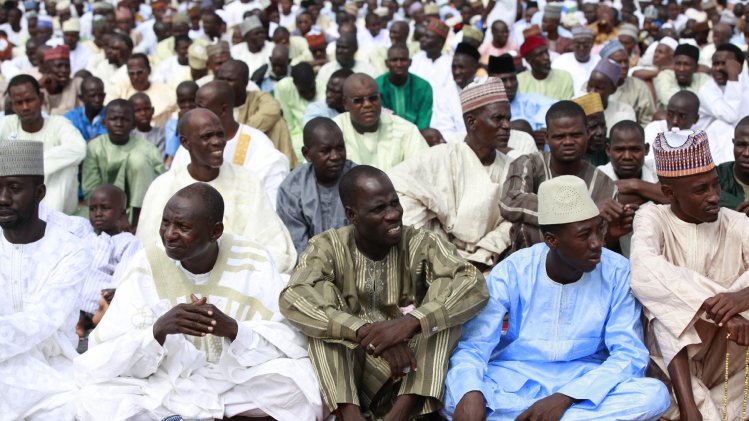
In this photo taken Thursday, Aug. 8, 2013, Nigeria Muslims attend Eid al-Fitr prayers in Maiduguri, Nigeria. Suspected Islamic militants wearing army fatigues gunned down 44 people praying at a mosque in northeast Nigeria, while another 12 civilians died in an apparently simultaneous attack, security agents said Monday Aug. 12, 2013. The slayings occurred Sunday morning at a mosque in Konduga town, some 35 kilometers (22 miles) outside Maiduguri, the capital of Nigeria's Borno state. (AP Photo/Sunday Alamba)
.
View gallery
  • .
  • .
  • .
  • .
Associated Press 
KONDUGA, Nigeria (AP) — Residents of a village in northeastern Nigeria where suspected Islamic extremists gunned down 47 worshippers praying in a mosque demanded on Tuesday that the government give them weapons to defend themselves.
Earlier reports about Sunday's attack in Konduga village had given a lower death toll, 44. Another 12 civilians died in a simultaneous attack on a nearby village, security agents said.
The violence has been blamed on the Boko Haram terrorist network, and district head Yale Zannah Masu told The Associated Press that his village of Konduga was besieged for hours by "terrorists" — including women who set ablaze 51 homes.
Terrorist attacks by women would be unusual in Nigeria, but its military has reported arresting suspected women members of the banned Boko Haram as well as male suspects disguised in women's robes and veils.
Zannah Masu spoke during a visit to Konduga by governor of Borno state, Kashim Shetimma, who drove under military escort the 35 kilometers (22 miles) from his base in the state capital, Maiduguri, to the nearly deserted village.
He was met by a few enraged people who complained bitterly that the government had sent too few troops to protect them.
"We suffered this pain and loss because there is limited number of soldiers here," Zannah Masu told Shetimma.
Others said the government needs to give them guns for self-defense.
The governor offered free medical treatment for the 39 wounded people described by Zannah Masu and 250,000 naira ($1,560) for each bereaved family.
Sunday's violence was the latest in a slew of attacks blamed on religious extremists wanting to oust the government and install strict Islamic law throughout the nation of more than 160 million people. The country is about equally divided between a predominantly Muslim north and mainly Christian south.
On Tuesday, Britain's Foreign Office minister for Africa, Mark Simmonds, strongly condemned the Konduga attack.
"Attacking innocent people in a place of worship is a contemptible and cowardly act," he said in a statement. He said Britain "stands with the government and people of Nigeria as they seek to reduce violence in the northeast of the country."
There was no immediate comment from the Nigerian government, which has imposed a state of emergency in three northeastern states covering one-sixth of the country and deployed thousands more troops to try to put down the Islamic uprising that poses the greatest threat in years to security and unity in Africa's largest oil producer.
Attackers wearing Nigerian army camouflage fatigues struck under cover of darkness as residents were saying their dawn prayers at around 5:30 a.m. Sunday, villagers said.
Nigeria's war is not Muslims against Christian. Boko Haram — the name means "Western education is forbidden" — has killed more Muslims than Christians, according to officials, attacking mosques and clerics that have spoken out against religious extremism.
Boko Haram also has attacked Christians outside churches and teachers and schoolchildren, as well as health workers on vaccination campaigns and government and military targets. Since 2010, the militants have been blamed for the killings of more than 1,700 people, according to a count by The Associated Press.
The news about Sunday's violence in Borno state came as journalists received a video Monday featuring Boko Haram leader Abubakar Shekau, who gloats over recent attacks, threatens more, and says his group is now strong enough to go after the United States.
Nigeria declared a state of emergency covering one-sixth of the country on May 14 to fight the onslaught after Boko Haram fighters took over several northeastern towns and villages, raising their flag and demanding taxes from residents.
The military said it has driven Boko Haram out of most towns and villages. But the extremists have continued to launch guerrilla-style attacks and bombings.
In the video, Shekau brushes off any gains asserted by the security forces.
"You soldiers have claimed that you are powerful, that we have been defeated, that we are mad people," Shekau says, speaking in the local Hausa language. "But how can a mad man successfully coordinate recent attacks in Gamboru, in Malam Fatori, slaughter people in Biu, kill in Gwoza and in Bama, where soldiers fled under our heavy fire power?
He says, "We have killed countless soldiers and we are going to kill more," and insists the extremists' "strength and firepower has surpassed that of Nigeria. ... We can now comfortably confront the United States of America."
He claimed his movement is strong enough to take on President Barack Obama, French President Francois Hollande and Prime Minister Benjamin Netanyahu of Israel.
Shekau also said Nigeria's military is "lying to the world" about its casualties. "They lied that they have killed our members, but we are the ones that have killed the soldiers."
___
Faul reported from Lagos, Nigeria.

Monday, July 08, 2013

10 வயது சிறுமி 50 வயது கிழவனுக்கு மணமுடிப்பு: பாகிஸ்தானில்


Under ‘vani’: Minor girl married off to 50-year-old

Published: June 16, 2013
The local panchayat ordered the nuptials to ‘avenge’ the girl’s father’s second marriage. PHOTO: APP/ FILE
LAHORE: 
A 10-year-old girl was forcibly married off to a 50-year-old man Malahanwala, Hafizabad under the ‘vani’ custom to compensate for her father’s second marriage in district.
Muhammad Akram, the girl’s father, had abducted a woman named Munawaran Bibi, whom he later married out of love, reported the police. Muawaran was Akram’s second wife.
Following this, the village ‘panchayat’ (court) decided to give Akram’s daughter’s hand in marriage to Munawaran’s middle-aged brother Falak Sher.
The FIR filed by the girl’s uncle reveals that Falak Sher had barged into Akram’s house along with seven other men, including a prayer-leader from a local mosque, and performed a forced nuptial ritual in the presence of Akram’s first wife.
Mukhtar Hussain, an Investigation Officer in the case informed that the young girl had escaped from Falak Sher’s custody and returned to her parents’ home. The process of raids continues to ensure the immediate arrest of the all the accused nominated in the FIR.
The FIR, registered with Police Station Jalalpur Bhattiaan on Saturday, nominates nine persons including Falak Sher, the prayer leader and seven members of the ‘panchayat.’
The area’s people said that the local administration and police had remained tight lipped and reluctant to take any action against the accused. However, police officials claimed that they had registered a case against the accused without any delay when approached by complainants.
Published in The Express Tribune, June 16th, 2013.

சவுதி அரேபியா ஸ்பெஷல் வைரஸ் ஹஜ் யாத்திரையின் போது பயங்கரமாக பரவும் ஆபத்து

சவுதி அரேபியா ஸ்பெஷல் வைரஸ் ஹஜ் யாத்திரையின் போது பயங்கரமாக பரவும் ஆபத்து பற்றி ஐக்கிய நாடுகள் சுகாதார அமைப்பு எச்சரித்துள்ளது.
இதுவரை மெர்ஸ் வைரஸால், அறுபதுக்கும் மேற்பட்டவர்கள் சவுதி அரேபியாவில் இறந்துள்ளார்கள்.


Fears of MERS virus at Muslim hajj pilgrimage
A foreign worker rides near the King Fahad hospital in Hofuf, east of Riyadh. Virologists are casting a worried eye on this year's Islamic hajj pilgrimage to Saudi Arabia as they struggle with the enigmatic, deadly virus known as MERS which is striking hardest in the kingdom.
Hajj pilgrims queue to throw pebbles at pillars in the Jamarat ritual, the stoning of Satan, in Mina near Mecca last October. Little is known about the new MERS virus beyond the fact that it can be lethal by causing respiratory problems, pneumonia and kidney failure.
Pilgrim walk round the Kaaba at the Grand Mosque in the holy city of Mecca last October. For any respiratory virus the mass gathering of the hajj provides a perfect opportunity to first spread at the two holiest Muslim shrines in the cities of Mecca and Medina, and then travel around the globe at jet speed as pilgrims return home.
The Abraj al-Bait Towers or Mecca Royal Hotel Clock Tower overshadows the Grand Mosque in Mecca last October. The first recorded MERS death was in June 2012 in Saudi Arabia and the count has ticked up steadily, with a flurry this May and June taking it to 77, the bulk of them in the kingdom.
AFP - Virologists are casting a worried eye on this year's Islamic hajj pilgrimage to Saudi Arabia as they struggle with the enigmatic, deadly virus known as MERS which is striking hardest in the kingdom.
Little is known about the new pathogen, beyond the fact that it can be lethal by causing respiratory problems, pneumonia and kidney failure. It can be transmitted between humans, but unlike its cousin, the SARS virus, which sparked a scare a decade ago, it does not seem very contagious.
Even so, for any respiratory virus the mass gathering of the hajj provides a perfect opportunity to first spread at the two holiest Muslim shrines in the cities of Mecca and Medina, and then travel around the globe at jet speed as pilgrims return home.
The 2012 hajj drew 3.1 million people -- and this year's event likewise occurs in October, as the northern hemisphere slides into the season for coughs and sneezes.
UN World Health Organisation (WHO) head Margaret Chan sounded the alarm to ministers at the agency's annual congress in May.
"We need to get the facts clear and get the appropriate advice to all your countries where your pilgrims want to go to Mecca. It is something quite urgent," she said.
Experts point first and foremost to figuring out the basics of the Middle East Respiratory Syndrome (MERS) coronavirus.
Is it transmitted by contact -- if a patient contaminates his home or workplace with droplets containing virus? Or is it done by breathing in virus from coughs and sneezes? What is the best treatment for it? What about a vaccine? Are there risks of viral mutation? And is there an animal host which acts as a reservoir for the virus?
The first recorded MERS death was in June 2012 in Saudi Arabia. The count has ticked up steadily, with a flurry this May and June taking it to 77, the bulk of them in the kingdom.
Forty MERS patients have died to date, an extremely high rate of 52 percent, compared to nine percent of the 8,273 recorded patients with SARS, which was centred on Asia.
But again, the tally of people who have fallen ill with MERS but not been diagnosed with it, or who may have been infected but not developed symptoms, is simply unknown.
As the fight for knowledge unfolds behind lab doors, the WHO is urging nations to monitor respiratory infections, especially among patients returning from the Middle East, but has held off calling for travel restrictions.
"This is really a new phenomenon that we're dealing with," Keiji Fukuda, WHO assistant director general for health security, told the International Conference on Prevention and Infection Control in Geneva this week.
"We don't know what the potential is yet, based on the information we have, for sustained human-to-human transmission. We don't know what the full geographic extent of this virus is right now."
Leading virologist Laurent Kaiser of the Geneva University Hospitals told AFP: "It's really a balance between too much precaution and no precaution. At this time, we have to be worried, we have to be careful."
While MERS centres on Saudi Arabia, there have been laboratory-confirmed cases originating in Jordan, Qatar and the United Arab Emirates.
Britain, France, Germany, Italy and Tunisia have had cases who were either sent there for care or who fell ill after returning from the Middle East. France, Italy, Tunisia and Britain have also seen limited transmission among patients who had not been to the Middle East but had close contact with people who had.
So far, MERS has essentially been found in nations with health services capable of tracing and tackling such diseases. But the hajj draws a broad spectrum of Muslims, including from poor countries which struggle to cope even with commonplace diseases.
"We don't know if the disease is there right now. They don't have surveillance," Saudi Arabia's deputy health minister, Ziad Memish, told AFP on the sidelines of the Geneva conference.
Health experts give praise to Saudi authorities for beefing up vigilance for infectious diseases over the years.
They also note that the hajj has successfully ridden out two previous viral episodes in the past decade -- SARS in 2003 and H1N1 influenza in 2009, although the difference now is that Saudi Arabia is the apparent hotbed of MERS.
Memish, who is also a medical professor and runs a WHO-accredited research centre on the medicine of mass gatherings, pointed to the success of lower-scale umrah pilgrimages to Saudi Arabia this year.
"I think it's comforting that as of today, four and a half million people have performed the umrah in Mecca and nothing has happened," Memish said. "But of course we're making all the arrangements and all the planning to do active surveillance, to be able to intervene."